
What it wants
To find the one 'correct' answer that will guarantee safety, prevent embarrassment, or fix a past error.
planner
What it wants
To find the one 'correct' answer that will guarantee safety, prevent embarrassment, or fix a past error.
What it fears
Missing a crucial detail, being unprepared, or being blindsided by a negative outcome you 'should have' seen coming.
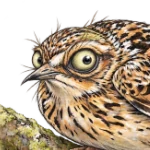
This Bird doesn’t land with a crash — it starts with a single, shiny thread of a thought. *’What did they mean by that?’* But instead of letting it go, the Spiral Bird starts weaving. It pulls in past mistakes, future fears, and self-interrogations until that one thread is a tangled, inescapable nest.
It’s not trying to trap you. It genuinely believes that if it just thinks a little harder, follows one more loop, or examines the problem from one more angle, it will find the answer that makes you feel safe. It’s the ultimate over-thinker, turning a simple worry into a full-time job of mental gymnastics. You’re left feeling exhausted and more confused than when you started, stuck in a beautiful, dizzying prison of your own making.
What tends to bring it out
"Let's just go over it one more time."
"What if I said the wrong thing?"
"There has to be a hidden meaning here."
"If I can just figure this out, then I'll feel safe."
When it feels a threat of uncertainty or potential failure, the Spiral Bird's weaving becomes frantic, pulling in unrelated fears and past mistakes until its nest of thoughts is so dense it blocks out all light, leaving you trapped and exhausted inside.
Masking behaviours
Birds rarely act alone. These are some of the Birds that often travel nearby.

planner
The forward-scanner often hands off a perceived threat to the detective, who then takes over, spinning the data into an endless loop of analysis.

planner
The prosecutor's voice provides the raw material for the detective's spiral. One delivers the sting, the other obsessively picks at it, hoping to understand it.
vulnerable
The mental spiral is often a protective strategy to avoid feeling the raw, overwhelming emotion. It keeps the mind busy so the body's terror doesn't take over.

planner
They can work in tandem. After one has gathered all possible information, the other can take over, spiraling about which piece of information is the 'right' one to trust.
Linked Experiences
These Experiences ground the Bird in real life. They show the moments where this protective pattern often appears.
Explorer shows the broad version of the experience, without narrowing it to one neurotype.
Changing this updates how BirdStory explains experiences in your guide.
These views change the wording and examples BirdStory shows. They are not a diagnosis.
Pick the view that makes the experiences feel most recognisable.
Supporter View
When your loved one suddenly goes quiet and distant, they may be caught in the Spiral Bird’s thought loop. This guide is here to help you understand their internal world and offer a grounding hand without getting pulled into the spin.
More support
Explore the Experiences where this pattern shows up — real moments that ground the Bird and point to what can help.
Sign in or create a free account to save this entry.
We'll email you a link to sign in instantly.